Solving Cryogenic Challenges Others Avoided: How API Heat Transfer Delivered an Alternative Helium Vaporization Solution

Industry
Industrial Gas Processing

Application
Liquid Helium Vaporization

Technology
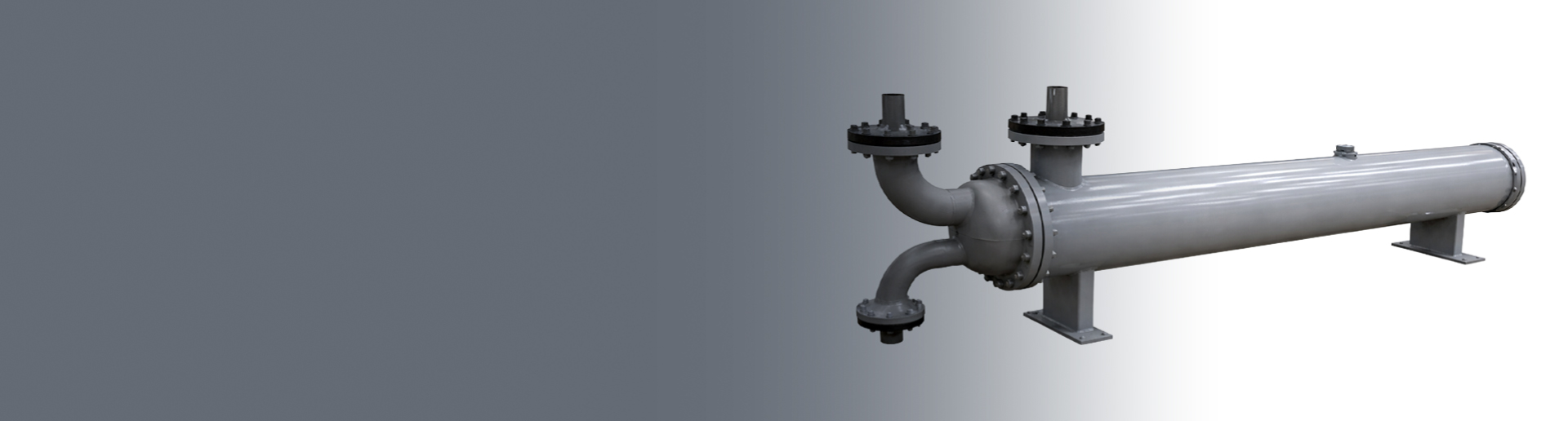
TEMA Class B BEU Heat Exchanger

Location
Global Diversified Air Separation Company / Pennsylvania
Others Saw Barriers. API Delivered Solutions.
When a leading global air separation company needed to replace a helium vaporizer nearing the end of its service life, the project presented challenges few manufacturers could solve. The original shell-and-tube unit, built in 1988 by a supplier no longer in business, handled liquid helium at an extreme temperature of -452°F. At temperatures this low, weld joints become especially vulnerable to brittleness and microscopic defects that can lead to failure.
Several manufacturers were invited to bid. Only API Heat Transfer could meet the combination of ultra-low temperature performance requirements and stringent ASME Section VIII, Division 1 and Section IX welding qualifications.
The Requirements:
- Operate reliably at ultra-low temperature of -452°F
- Meet strict safety codes, including ASME Section VIII, Division I and Section IX
- Conduct specialized testing to validate weld integrity under cryogenic conditions
- Match original specs (7 ft. length, 18 in. diameter)
Precision Engineering. Seamless Integration
API designed and manufactured a custom TEMA Class B BEU heat exchanger engineered for extreme cryogenic service and seamless integration into the customer’s existing system.
The Product: TEMA Class B BEU Heat Exchanger
The team reverse engineered the original unit to deliver a drop-in replacement tailored to the customer’s existing footprint and operating requirements.
Design advantages for this application:
- Bonnet-type integral cover designed for demanding high-pressure applications
- Made of 304L stainless on the tube side and 304 stainless on the shell side for durability at -452°F
- Resists low-temperature brittleness and corrosion for decades of reliable operation
- Removable tube bundle simplifies maintenance
The Execution: Mastered Manufacturing Complexity
Ideal for high thermal shock and differential expansion, the configuration introduced manufacturing challenges.
API overcame the challenges:
- Unit was cut and assembled in stages to match the internal geometry
- Qualified welders validated weld integrity through third-party impact testing and metallurgical analysis
- Made additional welds on the front head
The Results

Performance
- Consistent heat transfer at -452°F
- Safe operation under ASME cryogenic code requirements
- Weld integrity maintained at ultra-low temperatures

Durability
- Continuous, uninterrupted operation
- Leak-free performance under cryogenic stress
- Resists low-temperature brittleness and corrosion

Partnership
- Team effort enabled a reverse-engineered, drop-in solution
- Customer ordered four additional units
- Uncommon level of repeat business in a highly specialized market

Customer Testimonial
“We value our partnership with your process engineering team and appreciate their responsiveness to complex challenges. Your dedication to outstanding service has made a meaningful difference for our operation.”
Get a Project Estimate
Discuss specs, custom solutions, and integration